
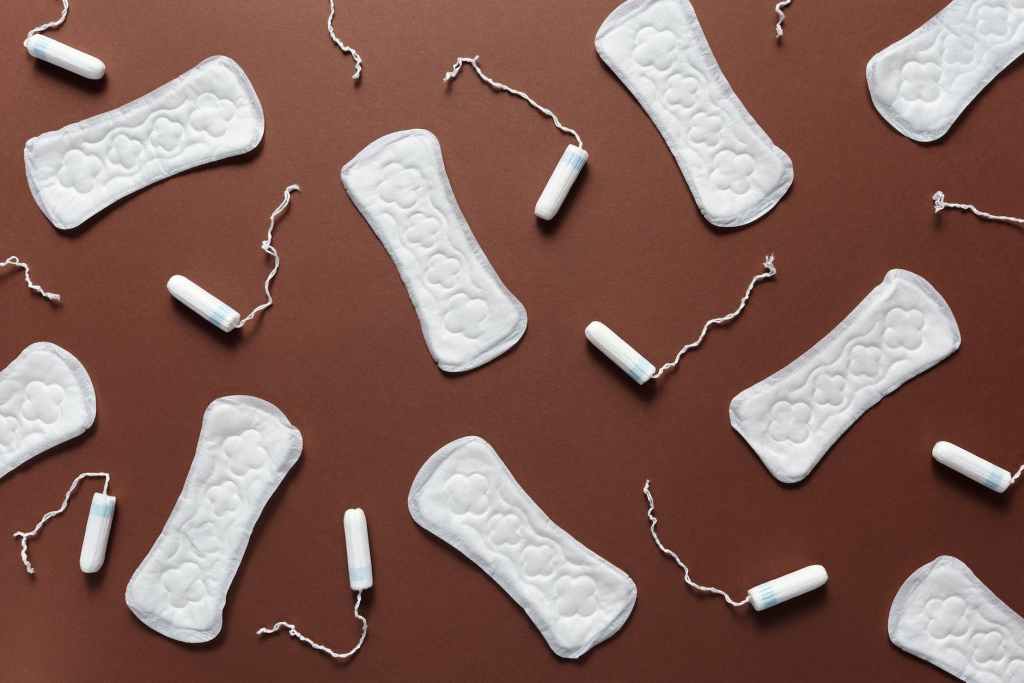
It’s over half way through 2023, and we have just been graced with the first ever study on menstrual products that *checks notes* uses actual blood.
Yes, you read that right: all menstrual studies – as in the ones that determine how much blood a tampon can hold, which then allows it’s absorbency to be marketed and believed by us the consumer – have not been using blood.
Call me naïve, but I was a bit stunned that we are only seeing a study with blood use now. If you had asked me this question prior to the study’s release, I would have likely guessed there was a study using blood done in the last 15 years. Surely right? Well, wrong. It was just released, this month of this year.
This original research study, done by an all-female team, was published in the MJ Sexual & Reproductive Health on August 7, 2023, by:
- Emma DeLoughery, Department of Medicine, Oregon Health & Science University, Portland, Oregon, USA
- Alyssa C Colwill, Department of Obstetrics & Gynecology, Oregon Health & Science University, Portland, Oregon, USA
- Alison Edelman, Department of Obstetrics & Gynecology, Oregon Health & Science University, Portland, Oregon, USA
- Bethany Samuelson Bannow, Department of Medicine, Oregon Health & Science University, Portland, Oregon, USA
This is what the study did and found:
As many of us know, and may even experience, heavy menstrual bleeding “affects up to one third of menstruating individuals and has a negative impact on quality of life”.
When someone goes to their doctor due to heavy menstrual bleeding, a diagnosis of anything comes in part with taking the patient’s oral history. As the study states, this history is “highly dependent on traditional disposable menstrual products such as pads and tampons”. If you are bleeding through tampons and/or pads, it is beneficial to know their absorbency level that you are bleeding through, because that would make a big difference. Bleeding through a liner, and bleeding through a heavy overnight pad is a large difference. The study states that prior to their research, “only tampons undergo industry-regulated testing for absorption capacity”, making it clear that testing, specifically with blood, is incredibly needed.
This study looked at mainstream, commercially available products tampons and pads, but also period underwear and discs and cups, “as use of alternative menstrual products is increasing, there is a need to understand how the capacity of these products compare to that of standard products”.
They took these products and tested them in a lab to determine what their actual capacity is to “absorb or fill”, as they are meant to be, using “expired human packed red blood cells”. This, right here, is what sets this study apart from every other study.
In an editorial piece that accompanied the study’s publication, the authors referenced a 2020 study that looked at published studies on PubMed that speak to menstruation in some form, and it found only 400 published studies looking at menstrual blood between 2011 and 2018. While 400 may seem like a decently high number, when you compare this number to the over 10,000 publications on erectile dysfunction during this exact same time period, it really puts women’s health in scientific studies in perspective.
So what did the study find?
Of the 21 menstrual products tested, the study found that a specific brand’s menstrual disc held the most blood of any product at 80 mL. The brand of period underwear they tested held the least, <3 mL. Of the product categories tested – so the products broadly with different brands – on average, “menstrual discs had the greatest capacity (61 mL) and period underwear held the least (2 mL). Tampons, pads (heavy/ultra), and menstrual cups held similar amounts of blood (approximately 20–50 mL)”.
When it comes to red blood cell volume capacity, the study found “considerable variability in red blood cell volume capacity of menstrual products”, which emphasizes “the importance of asking individuals about the type of menstrual products they use and how they use them”.
Not only is finding out the capacities with blood important, it makes a huge difference in how menstrual products should be marketed. These findings differ from what we, as the consumers, are being told, and that comes down to the fact that they have always been tested with non-red blood cell liquid, notably water.
Let’s make a hypothetical, as we at pip at sure what the category of water absorbency is in relation to level of absorbency.
Let’s say a tampon is shown to absorb 60mL of water, and it therefore gets marketed as a heavy flow tampon. That same tampon, when tested with red blood cell blood holds 40mL (again, these aren’t real numbers from the study, we are using them for argument sake). That could mean it is only a regular level of absorbency, but isn’t marketed as such.
That could be a huge difference for the user! Especially if you are bleeding through that tampon.
It’s hopeful that this study will change the way all menstrual products, both existing and new, are tested this way. We deserve to know how much absorbency the products have for actual blood, whether we have a heavy flow or not.
Citations: DeLoughery E, Colwill AC, Edelman A, et al, Red blood cell capacity of modern menstrual products: considerations for assessing heavy menstrual bleeding, BMJ Sexual & Reproductive Health Published Online First: 07 August 2023. doi: 10.1136/bmjsrh-2023-201895
periods in pain is not medical advice. Always consult your doctor or health care professional. Nothing in this blog post constitutes medical advice.
 periods in pain