
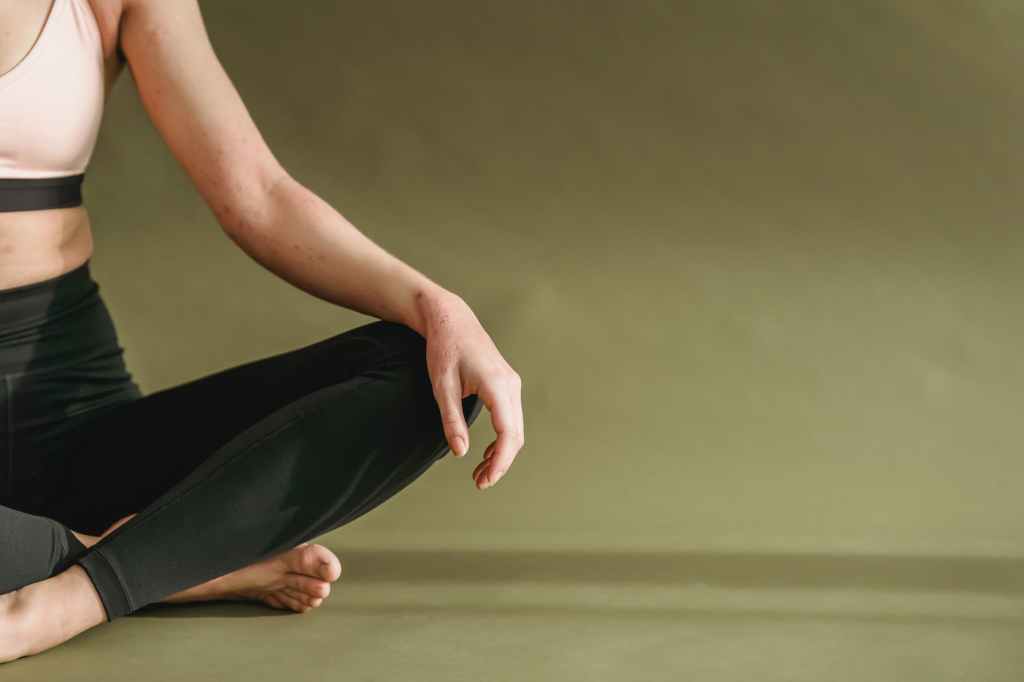
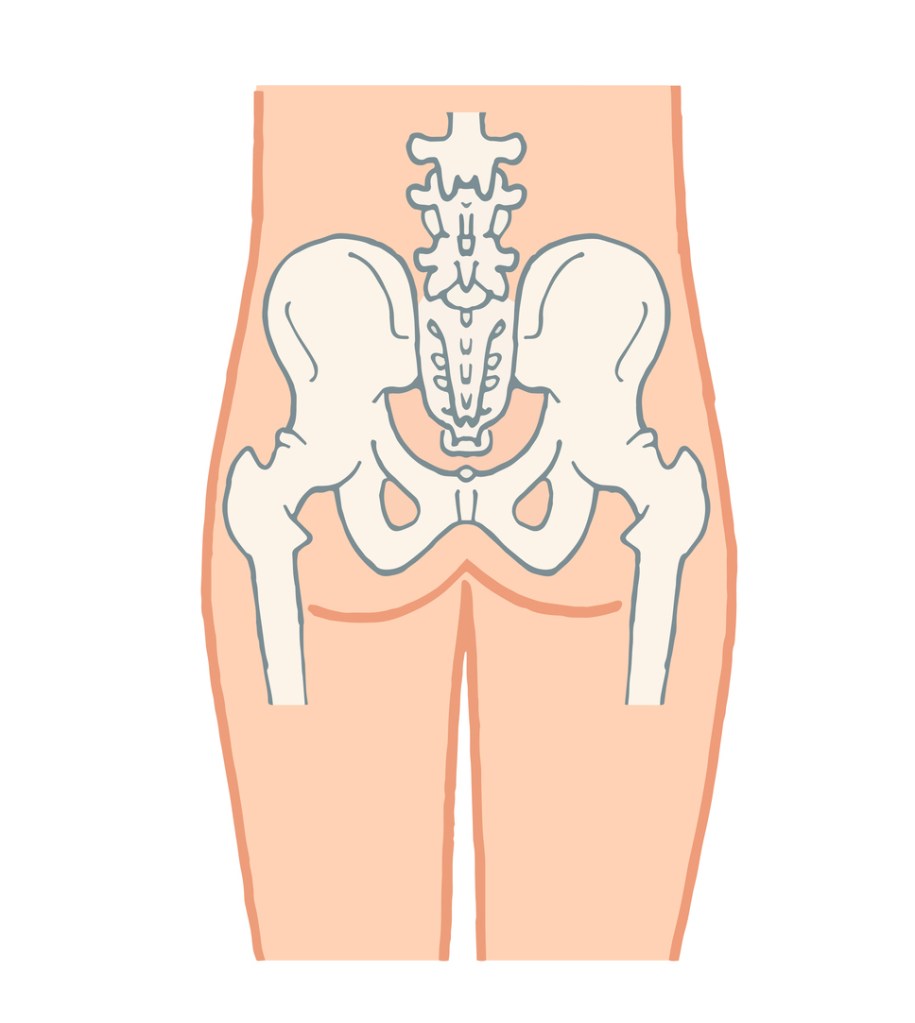
Your pelvic floor is a group of muscle and other soft tissue that connect your tailbone, sit bones and pubic bone in order to support the base of your core.
This function of this muscle group is to:
- Support the structures and organs of the pelvic region
- Contract and relax to control urination, defecation and
gas - Aid in blood flow and contraction during sex and
orgasm - For people assigned female at birth, they also support
childbirth and vaginal delivery
Healthy functioning skeletal muscle anywhere in the body, whether it be your pelvic floor or your bicep, should ideally be able to produce strong contractions, let go of tension, as well as have awareness and control over accomplishing both.
This awareness is called proprioception, which in a lot of yoga classes is referred to as the “mind-body connection”. This sense allows us to perceive the position and movements of our bodies within space, which is what allows us to feel if a muscle is relaxed or engaged. When we lose this connection, we lose the muscle in question’s function. In the case of the pelvic floor, one example of this may be urinary incontinence.
An exercise to assess your pelvic proprioception would be to try and individually squeeze each of the openings (the urethra, vagina and anus) inward and upward. You can imagine that you are stopping the flow of urine or the passing of gas if that helps, and for the vaginal opening often using touch can help provide feedback of the contraction.
Many people develop dysfunction in pelvic floor muscles; which can be a result of tension, weakness or a lack of awareness. The information available is confusing and difficult to navigate as well, especially considering all three can produce similar symptoms and are not mutually exclusive. It is very important that you seek out a pelvic floor physiotherapist who can not only provide valuable assessment and treatment, but can help you choose the best path for your healthcare. This could include other regulated health professionals, such as massage therapists. A massage therapist may be able to help through the treatment of associated
muscle groups. No muscle exists in isolation, meaning that when pelvic floor dysfunction exists there is often ipsilateral tension or weakness in the lower back, abdomen, hip and thigh.
The following remedial exercises may also be helpful to you, as movement is one of the most
important tools used for healing. That being said, please consult a professional and stop if
there is any recreation of pain during any exercise listed here.
Deep Diaphragmatic Breathing
The diaphragm and pelvic floor muscles have an inverse relationship. When we breathe deeply,
the diaphragm moves down to allow more space for the lungs to fill. This movement places
pressure on the abdomen which stretches and relaxes the abdominal and pelvic floor muscles.
When we exhale, the diaphragm relaxes and the abdominal and pelvic muscles contract.
Often, we are stuck in a pattern of shallow breathing. This can lead to dysfunction, as it means
that we never truly allow our pelvic floor to let go of tension.
To start deep diaphragmatic breathing, place a hand on your abdomen and one on your chest.
Take a deep inhale through your nose and expand your belly, ribcage and chest. Pause for a
moment at the top of the breath, and then slowly exhale through your mouth allowing the chest ribcage and belly to fall. The goal is to move slowly and really focus on what is happening with your pelvic floor to build up your proprioception (relaxed on the inhale, engaged on the exhale).
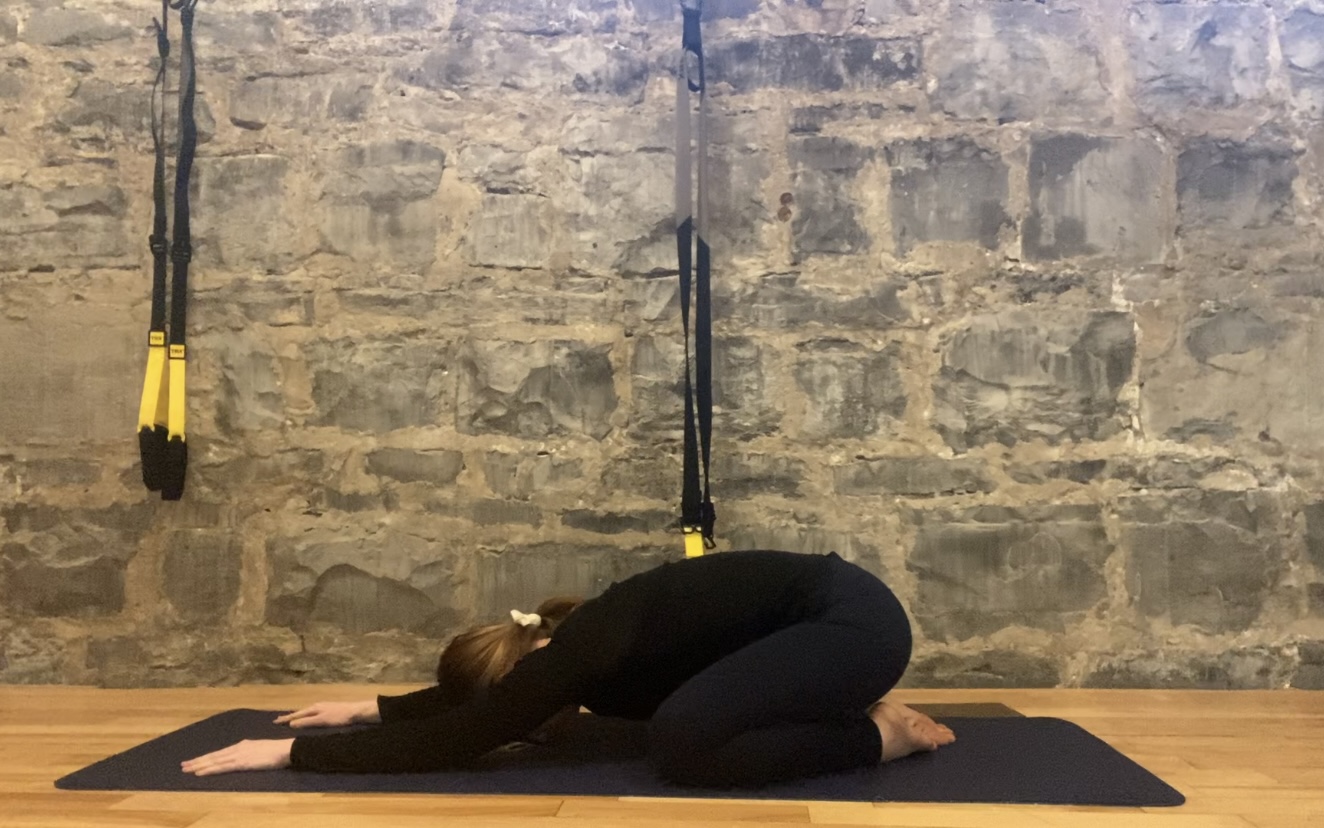
Postures that may help further build up your awareness during this exercise would be widelegged child’s pose, butterfly pose or a deep yogic squat. These yoga poses place the pelvic floor on a stretch, making it easier to feel the muscles relax. Find whichever posture is the most comfortable and accessible for your body.
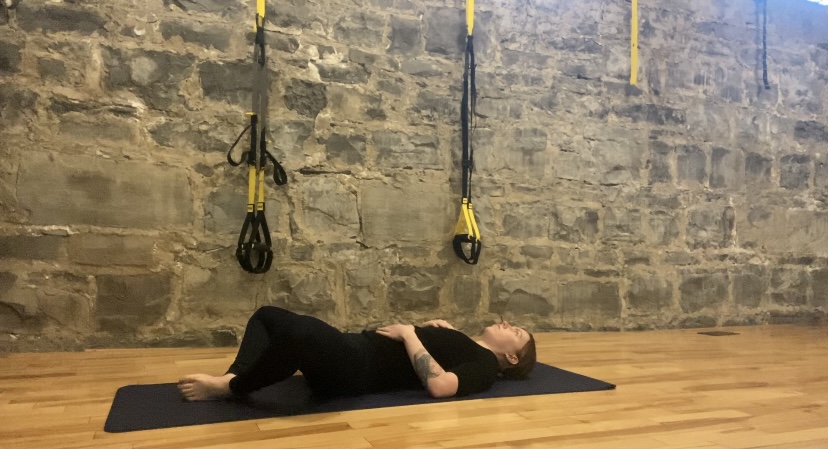
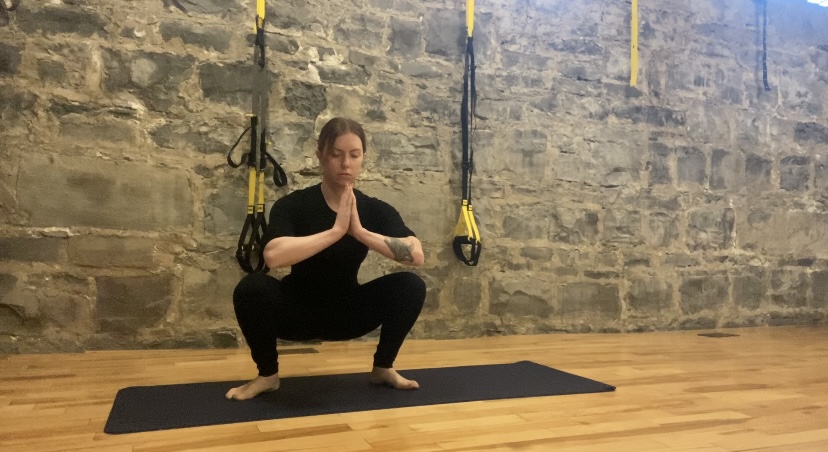
Another addition to this exercise, would be to add a pelvic floor contraction (or kegel) during
the exhale. Squeezing your pelvic floor inward and upward will further allow you to connect
with the relaxation during your in breath.
Deep Core Stability
The deepest abdominal muscle, the transverse abdominis (TVA), works to support and stabilize
the spine and abdominal organs. It co-contracts with the pelvic floor, so strengthening one
helps to develop strength in the other. It is important to note for proper cueing of these
exercises, that TVA functions to help you forcibly exhale your breath.
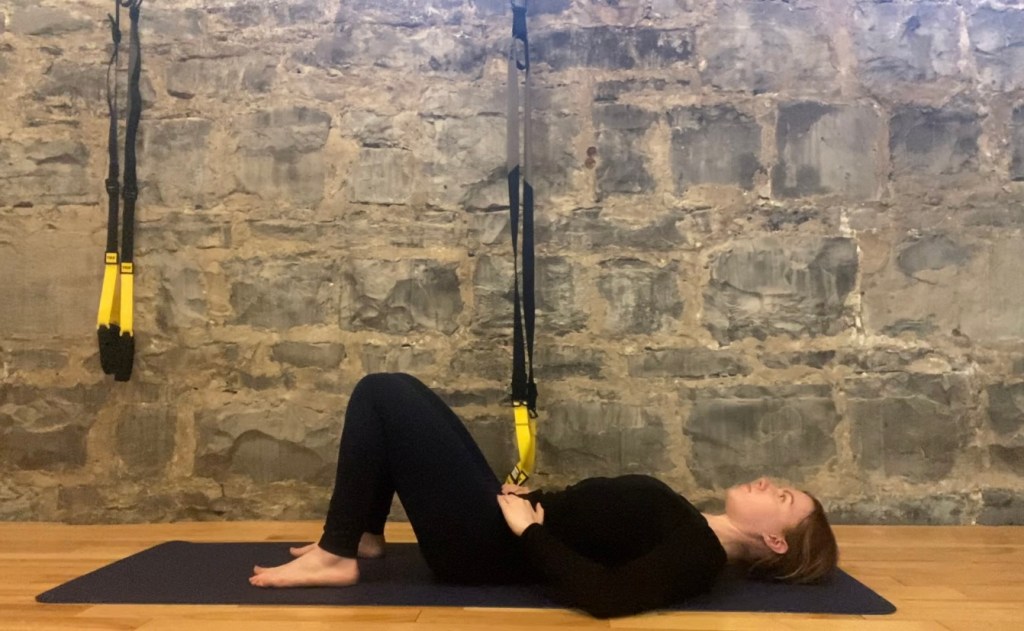
This first exercise is to develop awareness of
contracting TVA. Laying on your back with your
knees bent, place your fingers on highest point of
your hip bones. Then move your fingers slightly
(about an inch) inward and downwards. Take a deep diaphragmatic breath in, expanding your abdomen. And then exhale as if you’re trying to blow out your birthday candles. You should feel your TVA contracting into your fingers during the exhale. Repeat for a few rounds of breath.
Once you’re comfortable with feeling TVA engaged during breath, you can give this next move
a try. The Dead Bug is a strengthening exercise that primarily targets TVA. There are a few
variations, but the important thing to remember across the board is to maintain complete
connection with your lower back and the floor throughout the exercise and to use the breathing pattern learned in the first exercise (blow out those candles!).
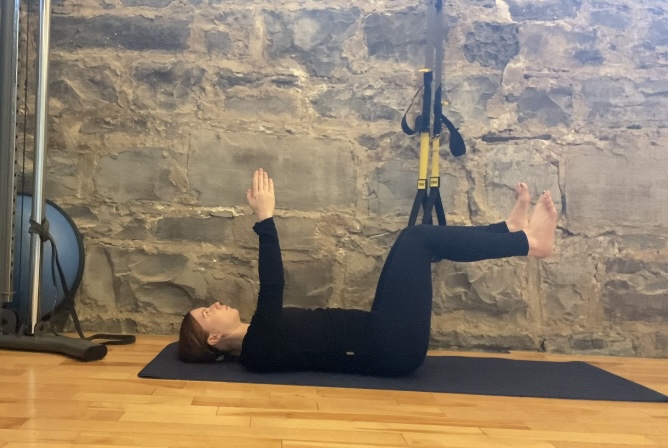
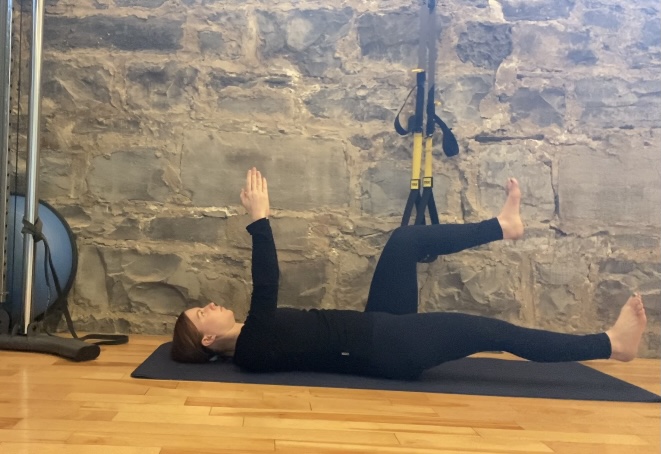
In this first variation, begin by laying on you back with your arms lifted straight up and your
knees bent at 90 degree angles off the floor. Check in with your lower back to ensure it remains pressed into the floor throughout the entire movement. Take a deep breath in, and then on the exhale straighten one leg at a time so it hovers above the floor. After you’ve exhaled completely, repeat with the other leg.
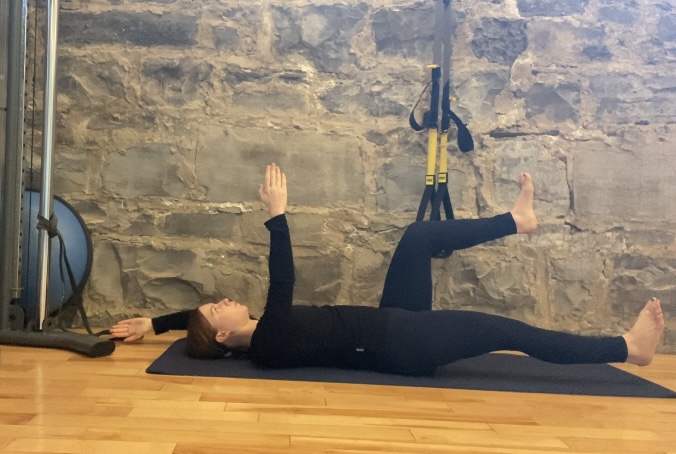
This second variation involves some upper body
movement with the arms. Following all of the steps
mentioned above, only on the exhale lower the
opposite side arm straight behind you so that it is also hovering above the floor. This progression helps to improve coordination by reinforcing contralateral movement patterns.
And finally, the last variation I am sharing today
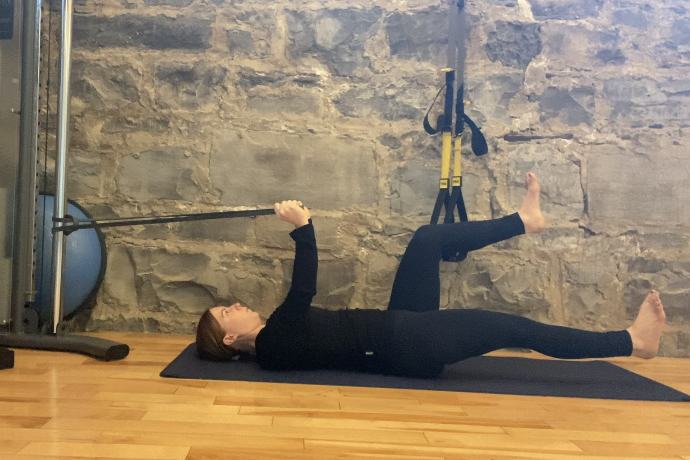
involves the addition of a resistance band. Dead bug’s are already designed to improve core stability and resist spinal extension. An effective way to increase resistance and anti-extension stability is through using a resistance band. Attach the band to a secure object behind your head, then keeping your shoulders on the floor pull the band forward with both hands (arms ideally slightly wider than shoulder width). Follow all the steps in the first variation while maintaining tension with the band.
Glute Strengthening
The muscles that make up your bottom play an important role in your pelvic floor strength and
function, one of them being that your glutes help to counter-balance your pelvic floor to
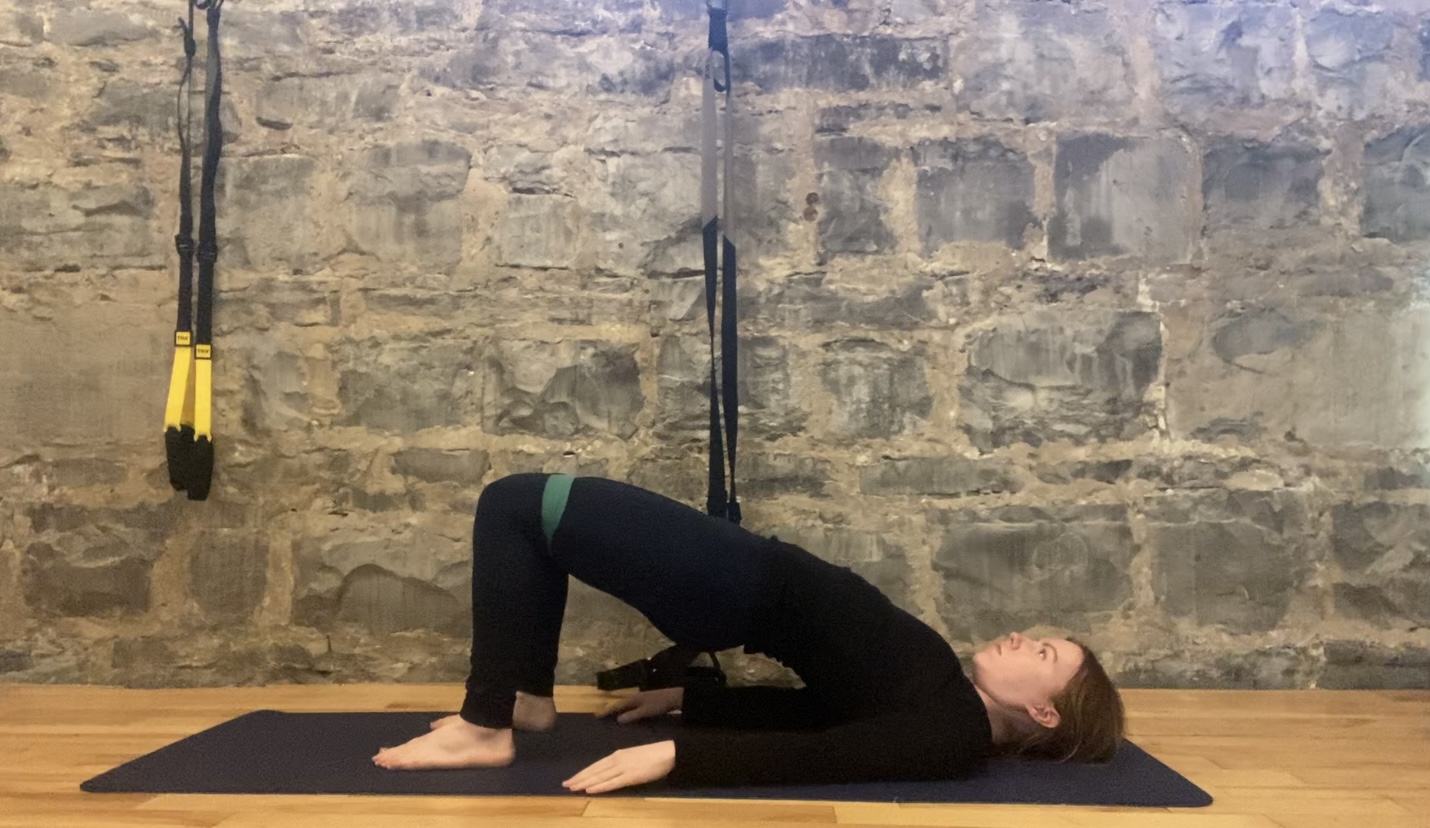
support the lower spine. Essentially, your gluteal muscles attach to the posterior portion of your lower spine, puling it away from your pelvic floor muscles which attach on the anterior surface of the spine. Strong glutes not only protect the spine, but they provide leverage for the pelvic floor to contract. Bridges are an excellent exercise that improves strength in both the glutes and pelvic floor.
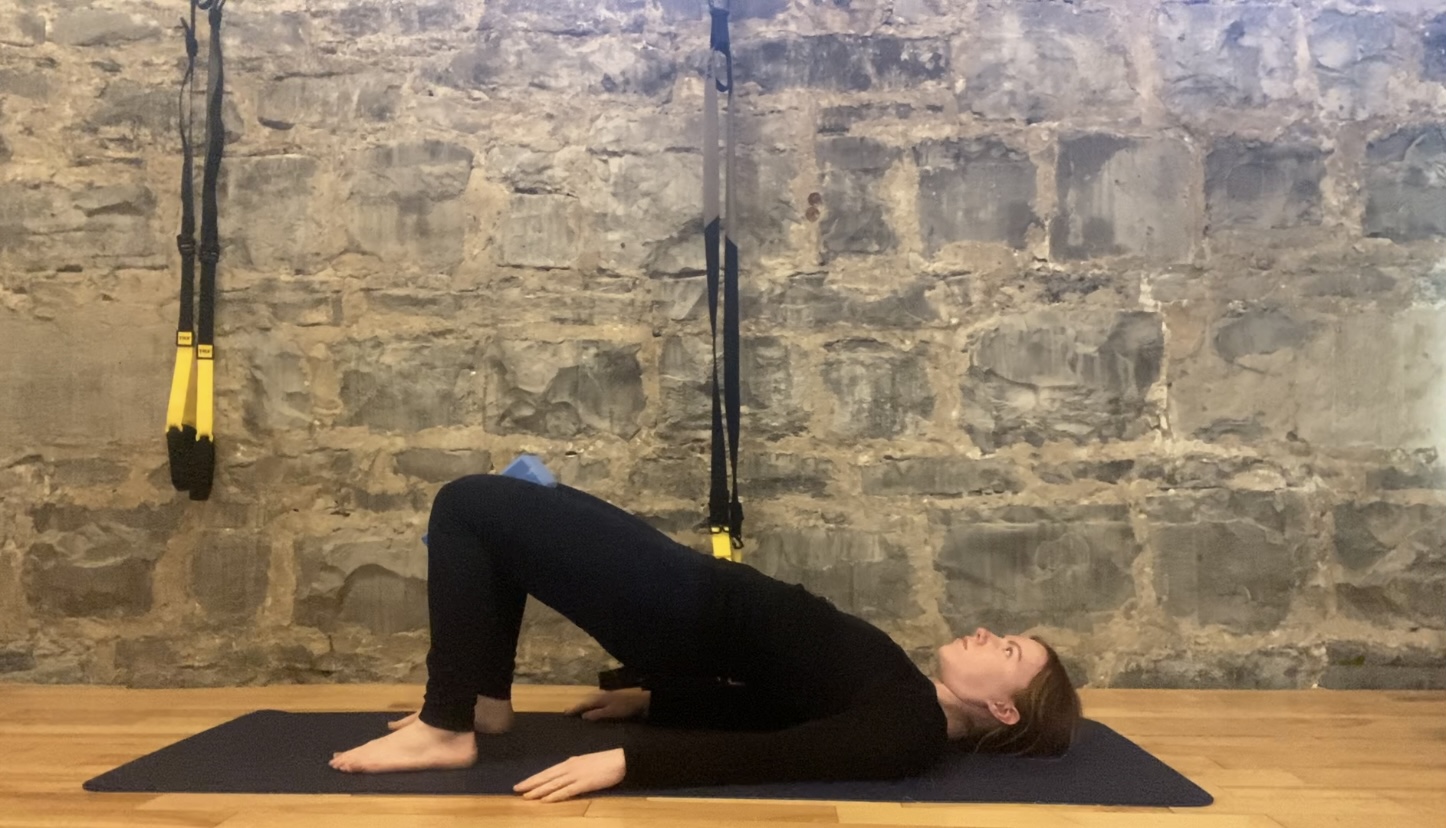
In addition to a standard bridge, I’ve added two variations which will help to engage your hip
abductors and adductors respectively. Which one will benefit you the most will depend on
individual need and assessment.
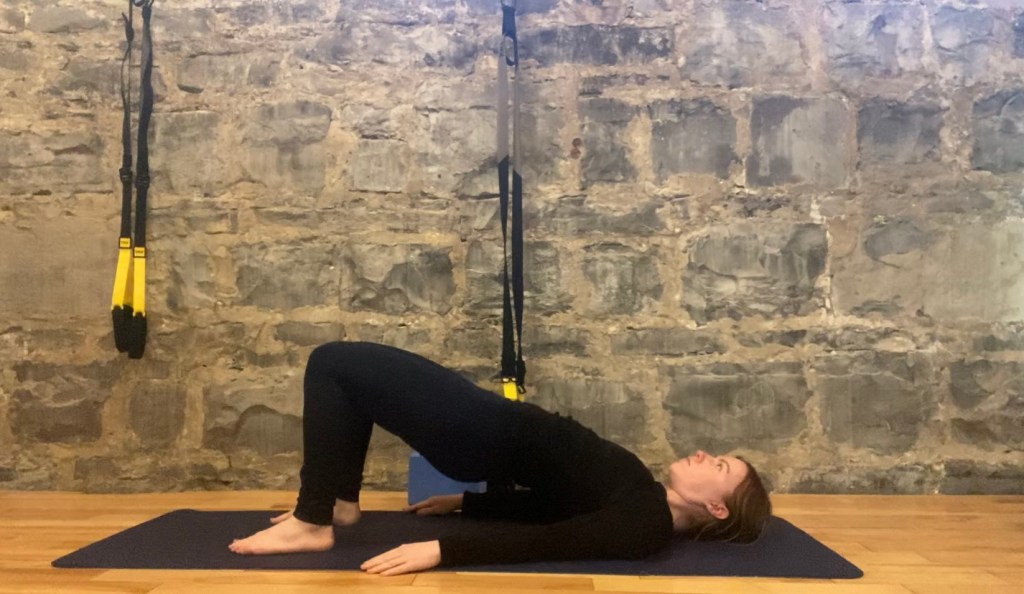
Start by laying on your back with your knees bent
and heels about a foot away from your sit bones.
Press your feet into the floor and lift your hips up
towards the ceiling, pressing your hips forwards
as if to flatten your lower back. Hold this position
for as long as you can maintain it, moving safely
towards the floor if your lower back begins to
arch.
You can emphasize the hip abductors by placing a small band around your legs above the
knees. As you lift your hips up, press your legs outwards into the band’s resistance.
For emphasis on hip adduction, place a yoga block in between your thighs on the medium
setting. Squeeze the block with your legs, and do not allow it to fall as you move up into the
bridge.
For anyone seeking more information on what steps to take next, feel free to connect with me
and I will be happy to share any referrals or direction that is within my ability to provide. I want
to take this opportunity to thank Veronica and Amanda for inviting me to be a part of their
podcast. I feel honoured to be able to share my knowledge with you all and help to be a part of
this beautiful community of menstruators.
This guest blog post was written by Jessica Ryan, RMT and 200-hour Yoga Instructor. You can listen to Jess’s the pip podcast episode on Spotify and Apple Music! the pip podcast EPI 3: Can yoga really help my pain and inflammation?

Jessica Ryan, Registered Massage Therapist and Yoga Instructor
As a massage therapist my intentions are to educate and support clients of all ages in achieving their health and wellness goals. I am located downtown in Kingston, ON, where I have been running my practice since May 2018.
I became passionate about learning and sharing knowledge while completing my 200-hour yoga teacher training at Yandara Yoga Institute in Baja, Mexico during the summer of 2014. The experience inspired me to become a massage therapist, so I could help people develop better
movement and an improved understanding of their own bodies. Since becoming registered in 2016, I’ve completed coursework on the Female Core and Pelvic Floor, as well as earned certification in Cupping, Athletic Taping, Instrument-Assisted Soft Tissue Mobilization, Clinical Hypnotherapy, and as a Functional Range Conditioning Mobility Specialist. Other courses I’ve competed are Functional Release for the Spine, Compassionate Teaching for Trauma Informed Yoga and How to Not Wreck Your Hips in Yoga.
Life is about change and growth, to me that means improved health is about consistent learning. I believe the best I can do for my clients is to reinforce our sessions by providing tools that will help them create change in their daily lives. I am committed to working alongside my clients to develop a healthier balanced life!
You can visit Jess’s website here
 periods in pain
One response to “Guest Blog Post: Pelvic Floor and the Mind/Body Connection by Jessica Ryan, BA, RMT, Yoga Instructor”
[…] So, one really easy way to improve your pelvic health is to start working on taking deep breaths by using your diaphragm. For more information on the pelvic floor and diaphragm connection, check out the previous guest blog post by Jessica Ryan here! […]
LikeLike