
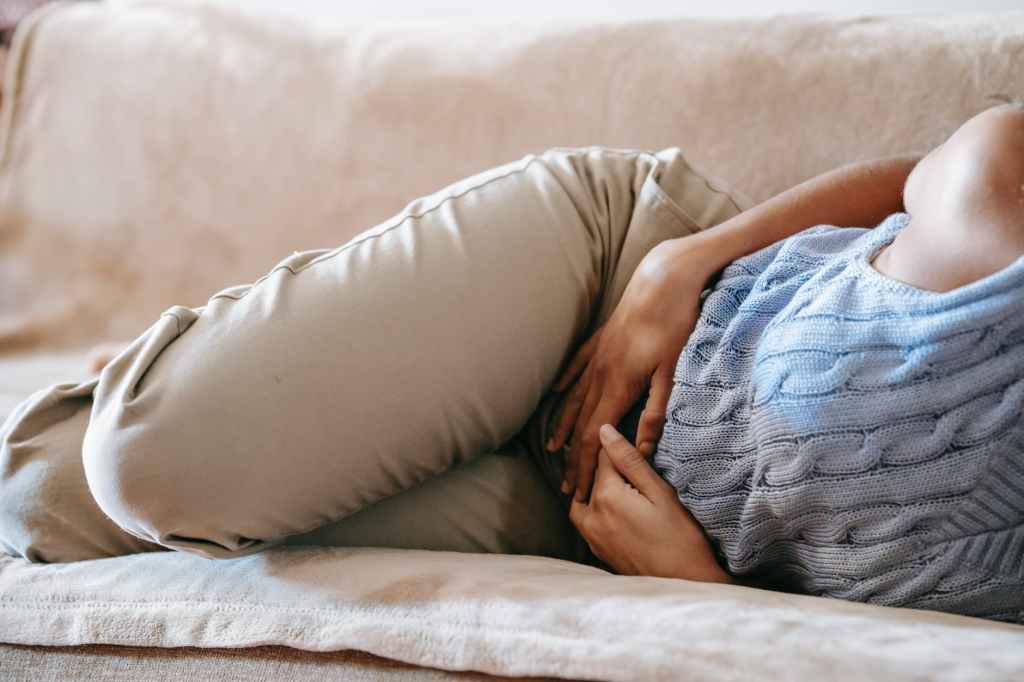
If you’re among the 90% of women with endometriosis who have GI and tummy issues and symptoms, you already probably know the discomfort, frustration, and down right pain that can come from it.
Yes, you read that stat right: 90% of women and girls with endometriosis present with GI issues. Bloating is a super common one – hello endo belly – as is diarrhea, constipation, painful bowel movements, nausea and/or vomiting (dry heaving is in this category). This is why so many are mis-diagnosed with IBS (Irritable Bowel Syndrome) before being diagnosed with endometriosis. Though, don’t let that common misdiagnosis fool you: you can have IBS and endo at the same time.
So what causes all these tummy problems with endo?
Seeing as endometriosis can be everywhere in the body, endo of the bowel and intestines can contribute – and often do contribute – to the GI issues many of us have. But endo of the bowel isn’t that only cause of GI troubles. GI symptoms are actually independent of location of endometriosis lesions in relation to the bowel, contrary to common belief (though, of course, endo in the bowel doesn’t help GI problems). So this means that you can have GI symptoms without endometriosis actually “infiltrating into the bowel”.
If you have endo, you are at a higher risk of SIBO (Small Intestinal Bacterial Overgrowth), which can happen due to the systemic and chronic inflammation of the intestines. SIBO can be contributing to your bloating, diarrhea, gas, and the abdominal cramping that is so often tied to it all.
What is endo of the bowel?
In bowel endometriosis, endometrial-like tissue grows on the surface of or inside the intestines, on the rectum, or in other parts of the bowel. This may cause:
- constipation
- bloating or gas
- pain in the pelvic area or lower back
- pain during sex
- infertility
- rectal bleeding while menstruating
- extreme pain during a bowel movement
- digestive or gastrointestinal pain
Because some of the symptoms of bowel endometriosis include digestive or gastrointestinal pain, it is commonly mistaken for IBS, like we said (again, you can have both). The main difference between the two is the frequency and severity of pain.
Someone with IBS may experience pain several times a week over the course of a month, while bowel endometriosis causes intense pain specifically during the menstrual cycle (though it is not necessarily only during menstruation: it could act up during ovulation as well).
Other endo areas that can cause GI issues
Peritoneum: One of the most common sites for endometriosis to be found, this lining of the intestines can give all the same symptoms of bowel endometriosis cases.
Cul-de-sac (pouch of Douglas): This area lies between the posterior uterine wall and the rectum. It is a common site for endometriosis to manifest itself and can often cause painful bowel movements and constipation, due to the pressure these lesions apply to the rectum. Patients can also experience painful sex as this area is near the posterior vaginal canal.
Rectum: Endometriosis implanting the rectal wall often cause severe painful bowel movements, constipation, and even rectal bleeding. Lesions can also lay in the perianal area (directly behind the anus), which can often cause back pain.
Colon and small intestine: Endometriosis can latch onto the outside of the intestines, both large (colon) and small. It is important to note that these lesions cannot be spotted by a colonoscopy as they are on the outside of the bowel walls. Rather, bowel intestinal endometriosis requires a skilled surgeon with a keen eye to what is commonly referred to as “running through” the intestines and checking for lesions.
Appendix: The appendix is a common organ for endometriosis lesions to spread. Their symptoms often present in the form of gassiness, bloating, and pain, particularly in the right lower quadrant. Due to its susceptibility to endometriosis and the highly held notion that the appendix is likely a vestigial structure (lacks many functions and specific use due to evolution), it is not uncommon for surgeons to perform an appendectomy (cutting out the appendix) during laparoscopic excision surgeries.
How can I find GI relief from my endo?
For us, some of the ways we find endo GI relief is:
Tracking triggers: to start, track what foods, activities, and even drinks are triggering your GI response, and start to make changes for these triggers with the help of your doctor, a registered dietician, and/or a naturopathic doctor. No one “diet” can cure endo – as we know, nothing can cure it – so be sure to make any changes under the supervision and guidance of a health professional.
Integrative health: we find GI relief through frequent osteopathic adjustments to help with GERD and indigestion, and acupuncture to increase blood flow. Depending on your body and its needs, chiropractic and massage therapy can also be integrative health options for you.
Exercise: everyone’s body is different, and that goes for your endo and impacts to GI and digestion. Easy movement, such as walking and slow yoga, are great ways to incorporate exercise that is easy on the body and it’s inflammation. Be sure to check out our blog post on yoga for pelvic pain that includes some twists which can aid in digestion!
Tea: it may sound small, but herbal tea can be a great tool for endo digestion issues. Peppermint tea is great for nausea and tummy aches; lemon balm and ginger is great to aid digestion after a meal; and chamomile is wonderful for before bed to help relax the body and mind.
Diet: please ensure any diet changes are supervised and suggested by a professional. Diet culture has impacted many people’s relationship with food and their body, so take good care before partaking in diet changes. Restrictive dieting and cutting food groups out of your diet do not guarantee endo relief, and can cause much more damage to the body and our body image then we may think. Allergy and sensitivity testing can help inform if there are changes you can be making. Ensure that if you do cut out food groups, you’re doing it safely under supervision of a professional and done with vitamin and mineral supplementation if needed. Supplements should also be incorporated under the supervision and instruction of a professional, such as a doctor, naturopath, or registered dietician. If any health professional is telling you weight loss is the first step, please advocate for your health and wellbeing and seek out a second opinion, if you feel that is best.
References: Maroun P, Cooper MJW, Reid GD, Keirse MJNC. Relevance of Gastrointestinal Symptoms in Endometriosis. Australian and New Zealand Journal of Obstetrics and Gynecology 2009; 49: 411-414 | https://weillcornell.org/news/what-is-bowel-endometriosis#:~:text=Symptoms%20of%20endometriosis%20of%20the,bloating%20or%20gas
 periods in pain