
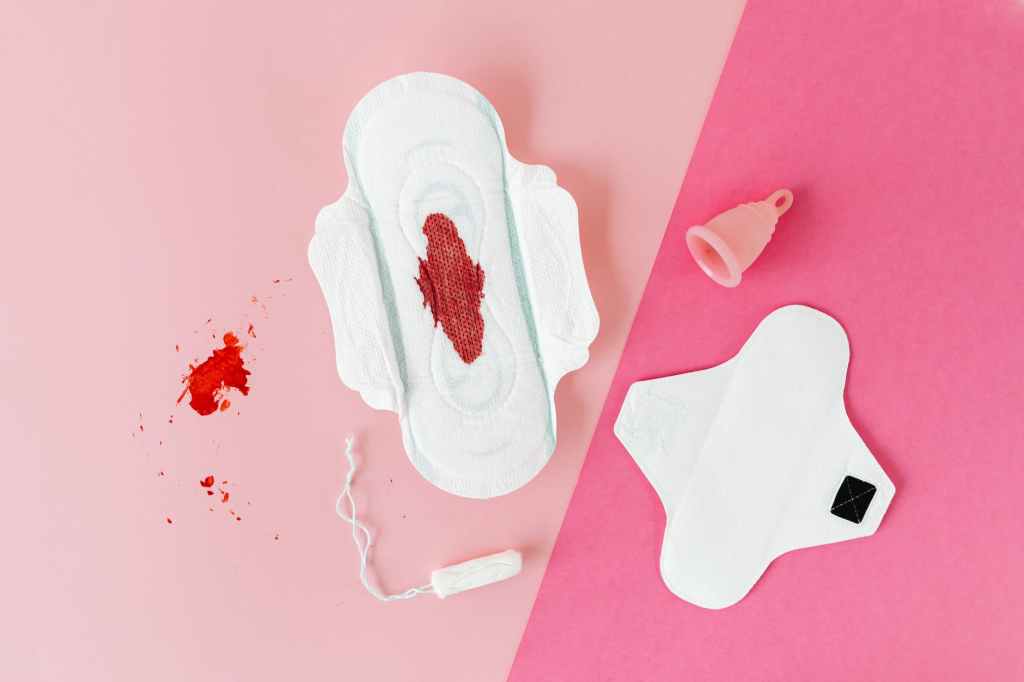
Can we do away with the 28-day cycle? It’s about time we all realize that not every menstruator will have a 28-day cycle. In fact, a healthy cycle can vary from 21 to 35 days, and each month can be slightly different from the last, as there are plenty of factors which can influence the flow of one’s cycle.
The same goes for periods lasting 7 days. No two periods will be the same, and that goes for different menstruators and cycles. One month you may bleed for 5 days, and the next, 6 or 7. A little fluctuation in both of these timelines is completely normal and healthy.
Now, that is not to say you shouldn’t pay attention to how long your cycle and period lasts, as the numbers can speak volumes. Too short a cycle and too long can be big indicators that there may be something else going on in your reproductive health. The length of your period can be telling too, along with the colour of your blood, flow, and whether you have clots or not.
For myself, I’ve never had a cycle be 28 days and a period of 5-7 days. This supposed combo is taught to us as the pinnacle of a healthy cycle, and while my cycle has never been healthy (hello PCOS and endometriosis), I was brainwashed into thinking if it wasn’t this combo, I was not healing my cycle. I was so sure that 28-7 was normal that it wasn’t until I was in my 20s that I realized almost no one I knew had ever actually had this.
So, let’s breakdown what exactly makes up a healthy cycle: what does the pattern of my cycle say about my reproductive health, and what are the things I should be looking for each month to ensure I understand what my cycle is, and what it may be trying to tell me.
The menstrual cycle is the name for your entire 21 to 35-day cycle. Day 1 begins on the first day of your period and goes all the way until the day before your next period starts.
Within a menstrual cycle there are four stages:
- Menstrual Phase: days 1 to 5-7
The first day of your menstrual cycle starts on day 1 of your period, and lasts until your period is finished. That’s why the menstrual phase can be days 1-5 or days 1-7. During this phase, the hormones estrogen and progesterone drop, which causes the endometrium (lining of the uterus) to break down and be shed.
Period blood flow typically starts light on day one, then gets heavy for the second and third day, lighting up to spotting again through days four, five, and beyond. Some menstruators don’t spot at the begging or end, while others may have a day of spotting somewhere in the middle. Others have a heavy flow the entire 5 to 7 days, while others have very light bleeding for 3 to 4 days.
Bleeding less than 3 days and more than 7 should be noted, and you should tell your doctor that you are experiencing abnormal period flow.
Throughout your period, the colour of your blood may differ. This has a lot to do with the reaction of blood mixing with oxygen. The colour can also be a sign of where you are in your period flow, as well as possible other signs, such as too much estrogen, and clotting.
Black or Brown Period Blood. Black and/or brown period blood is normal and healthy in the course of a menstrual cycle– it’s simply just old blood that has reacted with oxygen to turn a different colour. This blood can come as spotting at the beginning and end of your period.
Dark Red Period Blood. Period blood that is a darker red shade is typical to see with the heavier flow during the beginning and middle of your period.
Bright Red Period Blood. Period blood that’s bright red period blood is the newest blood. This colour of blood is typically seen in the middle of your period when you are in the thick of your flow. It’s also normal to start and end your period with bright red blood.
Pink Period Blood. Pink blood is typically seen during lighter stages of your period, like the beginning and end, either as a light flow or as spotting. Pink blood around ovulation can be normal as it is mixed with your cervical mucus, changing the colour from a brighter or darker red to a more pink colour. Pink period blood can also come from being overly stressed, having hormone or nutrient deficiency, or when over-exercise is resulting in the slow down and stop of menstrual cycles. If you have one or two days in your period where you have pink blood, it shouldn’t be anything to worry about. If you’re having consistent cycles where your whole period is pink blood, and the period flow is very light, lasting only a day or two, speak to your doctor about what may be the cause.
Clots. Seeing some blood clots in your period flow isn’t necessarily a sign of concern. Clots can range in size and colour. If you are passing clots, take note of the size, colour, and how many you are passing. If you are consistently passing many small clots, or you are passing clots larger than the size of a quarter, speak to your doctor as it may be signs of uterine issues, such as endometriosis.
- Follicular Phase: days 6-8 to 13
The follicular phase starts the day after your period ends. During this phase, your brain produces rising amounts of follicle-stimulating hormones which tells your ovaries to promote the development of several follicles. Each follicle contains an egg, one of which will reach maturity. Estrogen rises again in order to assist the ovaries in maturing the egg for ovulation. Nearing the end of the phase, your ovaries will start to secrete estrogen to start the thickening of your uterine lining.
- Ovulatory Phase: days 14 to 17
During the ovulatory phase, luteinizing hormone is released, which causes the matured egg to be released from the ovary. This is ovulation, where the egg travels the fallopian tube into the uterus.
Even if you have a regular, normal cycle, you may not actually ovulate every single month. While not ovulating regularly can be a sign of PCOS, not ovulating a few months in a year can be quite normal. Here are some ways you can know if you are ovulating (that doesn’t include expensive ovulation sticks from the drugstore) – and no, tracking ovulation isn’t only for people trying to conceive!
- Changes in body temperature. During ovulation, your basal body temperature (BBT) rises slightly, staying higher until your period begins. You’re most fertile in the two days before your BBT increases. Tracking BBT can be a really great tool for tracking your entire cycle. It is cost-effective (you only have to purchase the thermometer once) and does not take as much effort as you may imagine.
- Changes in cervical mucus. Cervical mucus becomes clearer and thinner with a slippery consistency similar to that of egg whites leading up to and during ovulation. You might notice the change in consistency in your underwear, or when you wipe. Your cervical mucus changes throughout your cycle, so we at pip suggest paying attention to it throughout!
- Ovulation pain. You may feel a slight twinge of pain or mild cramps in your lower abdomen. This is called mittelschmerz. Not everyone feels this, so if you don’t, do not be alarmed. If you feel extreme, severe pain at ovulation, this may be a sign of an ovarian cyst, or possibly endometriosis. Be sure to let your doctor know if this happens to you.
- A libido boost. Your sex drive may increase right around the time your body’s about to ovulate (but it may not, and that is completely normal!).
- Changes in cervical positioning. Just before ovulation, your cervix may soften, open up and move up higher. This is a sign that the average menstruator may not be aware of, as it’s not something you feel unless you are manually checking for this.
- Light spotting. You may notice some light spotting. This is not a super common symptom, but it could happen, so don’t be alarmed if it does for you! Do tell a doctor if the bleeding is more than very light spotting.
- Vulva changes. Your labia may swell leading up to ovulation.
- Breast tenderness. Fluctuating hormones may result in achy breasts and sore nipples.
- Luteal Phase: days 18 to 28-35
The final phase, the luteal phase, is where the follicle develops into the corpus luteum and secrets progesterone. Progesterone allows your uterine lining to thicken even more, anticipating the implantation of the travelling egg. If no fertilized egg burrows itself into the lining, your hormones will drop, initiating your lining to shed, starting your period and the cycle all over again.
So how do we know if your cycle is considered normal? The first thing you can do is learn about the four different phases of your cycle and note if the date ranges make sense to your average cycle, knowing that there is a range in normal like we explained.
- Do you have a period that ranges from 3 to 7 days?
- Are you ovulating regularly?
- Do you have cervical mucus?
- Do you have pain throughout your cycle?
- Is the time between ovulation and your period starting sufficient (ie. is it very long or very short)?
Tracking your cycle and keeping a record of your body’s queues and symptoms is the best way to find out what is normal or irregular about your own cycle. Tracking your cycle can tell you a lot about the health of your body, and if there are any irregularities that may need medical attention.
To get an understanding of your cycle, you will need to track it for more than a few months. 3-6 months, if not a whole year, can give you a really good handle on what is or is not normal for you, remembering that every cycle is different, and some small irregularities are ok.
Here are some ways you can track your entire menstrual cycle, which can help answer some of the questions above.
- Start and end date. How long does your period typically last? Is it longer or shorter than usual?
- Flow. Record the heaviness of your flow. Does it seem lighter or heavier than usual? How often do you need to change your sanitary protection? Have you passed any blood clots?
- Abnormal bleeding. Are you bleeding in between periods? If so, when and how much?
- Pain. Describe any pain associated with your period. Does the pain feel worse than usual? Is it during your period only, or throughout? Is it sharp, dull, achy, or stabbing? Where in your body is the pain happening?
- Other changes. Have you experienced any changes in mood or behaviour? Did anything new happen around the time of change in your periods?
Menstrual cycle irregularities can have many different causes, not just medical issues. For example, stress, antibiotics, too much exercise, and illness can impact your cycle, so be sure to keep note of these things when you’re tracking your cycle. Of course, all types of birth control can impact your cycle.
Here is a non-exhaustive list of things that may impact your cycle regularity:
- Pregnancy or breastfeeding. A missed period can be an early sign of pregnancy. Breastfeeding typically delays the return of menstruation after pregnancy (though not always!).
- Eating disorders, extreme weight loss or excessive exercising. Eating disorders — such as anorexia nervosa — extreme weight loss and increased physical activity can alter the hormones your body releases, therefore impacting your cycle and ability to ovulate and have a period.
- Polycystic ovary syndrome (PCOS). PCOS is an endocrine system disorder that can cause menstruators to have irregular periods as well as enlarged ovaries that contain small collections of fluid.
- Premature ovarian failure. Premature ovarian failure refers to the loss of normal ovarian function before age 40. Women who have premature ovarian failure — also known as primary ovarian insufficiency — might have irregular or occasional periods for years.
- Pelvic inflammatory disease (PID). This is an infection of the reproductive organs that can cause irregular menstrual bleeding.
- Uterine fibroids. Uterine fibroids are noncancerous growths of the uterus. They can cause heavy and prolonged menstrual periods.
- Endometriosis. Endo can cause heavier periods and increased blood clots. It can cause severe pain during your period as well as throughout the cycle.
Getting to know your individual cycle is the best way to advocate for your health. Only you can know what is or isn’t normal in your cycle, and only you can tell your doctor what you are experiencing. Whether your cycle is the 28-day cycle with 5 days of bleeding each and every month, or you have fluctuations in your cycle, with each month varying from 21 days with 2 days of bleeding and 38 days with 7 days of bleeding, you’re the only one who will know what your cycle actually looks like. Either of these and anything in between should be something your doctor knows about. Be sure to tell your doctor at your next check-up what your cycle looks like, and if you have any concerns with it at all. Unless your doctor knows you are only bleeding for 2 days a month, they will not know to run tests and get your proper medical attention.
And remember: your menstrual cycle is a vital sign! It can tell you so much about your overall health. It’s also nothing to be ashamed of! Your period is not gross or something to hid. It means we are alive and well! Shout it from the rooftops – or say it silently to yourself. Whichever you chose, your cycle is something to embrace and learn.
Periods in Pain does not constitute medical advice or diagnosis of any kind. If you or a loved one are experiencing period and/or cycle pain, please consult a doctor.
 periods in pain